Foreign Policy Roundup #19: May 26-June 8, 2014

In this roundup, highlights include Mongolia’s hosting the UN Forum on Trade and Development in Landlocked and Small Island Nations, and continued high level engagement with the Russian Federation.


Neighbors

On invitation of the Mongolia Minister of Law X. Temuujin, the Chinese Minister of Law made an official visit to Ulaanbaatar to exchange ideas of possible cooperation in this sector.

Director of the Mongolian Parliament Z. Enkhbold received the Chinese Ambassador to Mongolia and the Head of the Chinese Investment Corporation. The meeting opened with an expression of gratitude for China’s contributions to the Confidence Building Measures in Asia meeting held in Shanghai. The conversation then moved to discuss the development of coal and natural gas related projects.

Russia’s Deputy Minister of Internal Affairs and Law met with the Mongolian Minister of Law X. Temuujin.

Mongolian Minister of Foreign Affairs L. Bold received the Russian Deputy Minister of Foreign Affairs I. V. Morgulov at the Mongolian Minister of Foreign Affairs.

Russia eyes Mongolia as transit country for energy trade in Asia.

Mongolia’s relations with NATO, EU, and Russia effected by situation in Ukraine.


Europe

Minister of Foreign Affairs L. Bold, made an official visit to Sweden and Denmark and met with his counterparts in the Swedish and Danish governments. While in Sweden, L. Bold also participated in a meeting of the Mongolia-Sweden Business Forum.

Deputy Director of the Mongolian Parliament and Director of the Mongolia-Austria Parliamentary Working Group L. Tsog received the Austrian Ambassador to China, the Vice-President of the Austrian Economic Chamber, and economic attaché to the Ambassador.


Asia-Pacific

Mongolia and Vietnam are marking 60 years of diplomatic relations. In honor of this anniversary, an article was released entitled “The First 60 years of Friendship and Cooperation.”

The Ministries of Foreign Affairs of Mongolia and South Korea held their 8th consultative meeting in Seoul.

B. Tsogoo made an official visit to Laos on invitation of the Laotian government.


Middle East

Mongolia’s General Consul in Istanbul met with representatives from the Turkish Minister of Foreign Affairs to express Mongolia’s condolences following the mining accident in Soma, Turkey.

Turkey and Mongolia are celebrating 45 years of diplomatic relations.

On the invitation of L. Bold, the UAE Minister of Foreign Affairs is making an official visit to Ulaanbaatar.


Multilateral

Mongolia is hosting a UN forum on trade and development in landlocked countries.


For previous postings, please CLICK HERE.


Posted in 2014, Foreign Policy Roundup, Mongolia and ... | Tagged | Leave a comment

Will Events in Ukraine Trickle East to Mongolia?

As President Obama declares that the US is preparing to boost its military presence in Europe to the tune of $1 billion, and NATO and the EU move quickly to deepen relations with Georgia and Moldova it is easy to conclude that the crisis in Ukraine and the recent actions of the Russian Federation are a very European issue. However, if we turn our attention to Mongolia, we can see that worsening US/EU relations with Russia are likely to have a far more global effect than may have been initially assumed.

Mongolia, for its part, seeks to simultaneously maintain good relations with its neighbors (Russia and China) while deepening relations with extra-regional powers such as EU member states, the US, Japan, and South Korea. While maintaining this balance and neutrality is difficult enough in a stable international environment, the recent increase in tensions between Russia and NATO/EU members has made playing both sides of the fence an increasingly delicate process.

The first sign that Mongolia was finding itself in an increasingly sticky situation appeared when the country chose to abstain from the UN resolution condemning the Russian annexation of the Crimean Peninsula. Everything about Mongolian foreign policy and general international outlook would lead one to believe that Mongolian officials do not welcome Russia’s aggressive actions. Not only would Mongolia not be keen on Russia’s attempts to legitimize its actions by reference to historic rights and “arbitrary decisions” (this having the potential to set a precedent for claims on Mongolia’s territory by China), but this kind of action by a great power against a smaller neighbor more generally underlines Mongolia’s own vulnerability. That said, it is also clear that Mongolia is not in a position to upset its relations with the Russian Federation, given its importance to the Mongolian economy and its role as a neighboring balancer vis-à-vis China. “Abstain” was likely the only decision Mongolia could make.

It would appear that the Russian government is also watching how countries on its eastern borders will respond to the crisis in its relations with Europe and North America. Case in point: Russian President Putin met with Mongolian officials 2 times in just the last 3 weeks. The first time, Mongolian Prime Minister N. Altankhuyag met with Putin to discuss the two countries’ bilateral relationship at the St. Petersburg International Economic Forum. The second time, Putin met with Mongolian President Elbegdorj at the Confidence Building Measures in Asia meeting in Shanghai. Russia is eager to keep Mongolia from sliding towards the United States and Europe.

While I do not know if the current situation in Ukraine was discussed at these meetings, Ukraine was on the agenda during recent meetings between the Mongolian Minister of Foreign Affairs L. Bold and the British Minister of Foreign Affairs two weeks ago. I would also guess that U.S. Senators Steve Lynch and Steven Shabet mentioned the issue during their visit to Ulaanbaatar as part of an official tour of Asia.

Mongolia and other small states seeking to maintain relations with Russia and the “West” are going to find it increasingly difficult to maintain a favorable balance. As Russia becomes more assertive of its foreign policy and security interests, its relationship with NATO and EU member states is unlikely to improve. While Mongolia has navigated the international arena successfully for the past couple decades, that well thought-out success has a limit. As Mongolia’s international profile rises and relations between real and third neighbors deteriorate, I predict that Mongolia’s goal of an omni-directional foreign policy will become more and more difficult to maintain. Difficult, but by no means impossible.


(Many of the resources and links for the post came directly from my “Foreign Policy Roundup”, which be can found here).

Posted in Foreign Policy, Mongolia and ..., Russia, United States | Tagged | Leave a comment

New to Ulaanbaatar in May 2014

By Julian Dierkes

Back in October 2013, I made a list of things that are arriving to/disappearing from central Ulaanbaatar.

I’ve copied that list here and am adding to it. New items since October 2013 that I’m adding in May 2014 in italics.

What has arrived?

  • sadly, Louis Vuitton and KFC
  • Mini, Bentley
  • child seats
  • sidewalks
  • parks [these are closely linked to Bat-Uul’s election win in 2012]
  • farmers’ markets
  • yoga
  • dogs on leashes
  • Sunday morning joggers and bikers
  • coffee culture

Barista Art at the Rosewood in Ulaanbaatar

What has disappeared, or at least nearly?

Note that some of these may be due to seasonal changes, as I hadn’t been in Ulaanbaatar in September before my last winter, really only in summer or winter.

  • stationary 80s-office-phone-looking old-granny cell phone booth
  • for-pay scales
  • free WiFi on Sukhbaatar, er Chinggis Khaan Square
  • Sukhbaatar Square
  • open gullys/missing manholes
  • street kids
  • packs of dogs
  • smoking
  • the sixth-floor souvenir shop at the State Department Store (though perhaps seasonal)
  • oversized sunglasses for women that were so popular across Asia (?) some years ago
  • Nescafe (see above on coffee culture)

What will appear in the future

  • navigation systems
  • wheelchair accessibility
  • bike lanes
  • city park along the Tuul
  • new airport (apparently)
  • subway (really, I wish they had selected light rail instead)
  • sports cars
  • Harley-Davidson
  • urban renewal and historical restorations embracing district north of government house (National University of Mongolia, German embassy, etc.)
  • road signs in the countryside
  • street names and signs in the city
  • network of cross-country riding trails
  • parking (meters)

What will disappear in the near future

I’m going out on a predictive limb here… 2-3 years is what I mean by “near future”.

  • stray dogs
  • stretched-out hand to signal for a car ride
  • that awkward extra half-step on most stairs

What will disappear in the medium-term future

I mean around 5 years or so.

  • new (to Mongolia) cars that are right-hand drive
  • the neo-classical Ministry of Foreign Affairs building, with its Stalinist (if that’s an architectural style) spire
  • deels in the city
  • some of the downtown university campuses
  • buildings of 4 floors or less in the urban core.
Posted in Change, Curios, Ulaanbaatar | Tagged | 3 Comments

Foreign Policy Roundup #18: May 12-26, 2014

Highlights for the past few weeks include: Putin meets with the Mongolian President at the Confidence Building Measures in Asia international forum and with Mongolian Prime Minister N. Altankhuyag at the St. Petersburg International Economic Forum.


Neighbors

Mongolian Prime Minister N. Altankhuyag is traveling to St. Petersburg to represent Mongolia at the St. Petersburg International Economic Forum. This year, Western opposition to current developments in Russian foreign policy has affected the Forum, with 40% lower international attendance. Western opposition has also put Mongolia’s relations with the Russian Federation in a tense position, highlighted by N. Altankhuyag’s meeting with President Putin during the event.

During the Confidence Building Measures in Asia meeting Shanghai, Mongolian President Elbegdorj and Russian President Putin had a meeting, during which they discussed bilateral relations.

Mongolian Minister of Law, X. Temuujin invited the Chinese Deputy Law Minister to exchange ideas on cooperation in the fields of law and rights.


Europe

Mongolia’s newly appointed ambassador to Moldova, L. Dugerjav, presented his credentials to the Moldovan President.

Mongolia’s Ambassador to the European Union, Kh. Davaadorj, participated in a conference held for the opening of a new East Asian Studies Center in the Netherlands at Gronigen University.

As Mongolia and Sweden mark 50 years of diplomatic relations, Sweden’s non-resident ambassador made an official visit to Ulaanbaatar.

L. Bold met with the British Minister of Foreign Affairs to discuss international developments ranging from Afghanistan and Ukraine to North Korea.


Middle East

Mongolian Minister of Foreign Affairs, L. Bold, received the Israeli Ambassador to Mongolia to discuss the two countries’ bilateral relations and congratulated the ambassador on the Israeli National Day.

North America

In preparation for the 2015 conference on Nuclear Nonproliferation, Mongolian representatives met with the 5 nuclear states’ in New York. The representatives made particular note of Mongolia’s non-nuclear status.

Minister L. Bold met with US Senators Steve Shabet and Steven Lynch during the Mongolian leg of their Asian tour.


For previous postings, please CLICK HERE.


Posted in 2014, Foreign Policy Roundup, Mongolia and ... | Tagged | Leave a comment

In Ulaanbaatar with EITI Project Graduate Students

Together with Dirk van Zyl, a colleague in UBC’s NBK Institute of Mining Engineering, I supervised an interdisciplinary group of graduate students in a project on the Extractive Industries Transparency Initiative (EITI) and focused especially on EITI reporting in Mongolia in the Spring term, see https://blogs.ubc.ca/maapps

I’m in Mongolia May 21-30 with some of the students from the group who will be presenting the results of their analysis of the EITI reporting to various audiences. One presentation at the Ministry of Mining that will focus on policy makers has been scheduled for Tuesday, May 27, already.

Another presentation will be at 16h on Monday, May 26, in the conference room of the Puma Imperial Hotel. This event will be co-hosted by the EITI Secretariat in Mongolia and will be free and open to the public.

Posted in Corruption, Governance, Mining | Tagged | Leave a comment

Foreign Policy Roundup #17: April 28- May 11, 2014

Highlights from this week include Gankhuyag’s tour of Southeast Asia, several newly appointed ambassadors, and the election of Mongolia to head the international “Freedom Online Coalition.”

Neighbors

On the invitation of Mongolian Minister of Finance, Ch. Ulaan, the Chinese Minister of Finance made an official visit to Mongolia.

The Deputy Chairman of the Mongolian Parliament and Director of the Mongolian People’s Party, M. Enkhbold, received the Russian Ambassador to Mongolia. During the meeting, they discussed M. Enkhbold’s upcoming trip to participate in the St. Petersburg Economic Forum.

The Mongolian Ministry of Foreign Affairs’ Director of Neighbor Relations, T. Togsbilguun, participated in the Shanghai Cooperation Organization “6+5” meeting. Mongolia is an official observer in the SCO.

Asia-Pacific

The Japanese Minister of Infrastructure, Transportation, and Tourism made an official visit to Mongolia, at which time he met with Mongolian Transportation Minister A. Gansukh. The Japanese government has financed the development of some of Mongolia’s key highways, and is a key partner in the building of the new international airport. The Minister also expressed that Japanese companies were interested in obtaining a share of the “Erdenes Tavan Tolgoi” coal mine. 

Mongolian Deputy Minister of Foreign Affairs, D. Gankhuyag traveled to Laos to meet with the Lao Minister of Foreign Affairs, Dr. Tonglun Sisulit. During their meeting, D. Gankhuyag discussed Mongolia’s engagement in the Asia-Pacific and its desire to become a member of the ASEAN Dialogue Partners. Laos and Mongolia have a long history of good relations, developed largely during the communist period.

Following his trip to Laos, D. Gankhuyag made an official visit to Vietnam, for official consultations between the two countries’ Ministries of Foreign Affairs.


Africa and the Middle East

After returning from his tour of Southeast Asia, D. Gankhuyag received the South African Ambassador to Mongolia. As Mongolia and South Africa prepare to mark 20 years of diplomatic relations, the two countries are increasingly looking to each other as models of resource development.

Member of Parliament and Director of the Mongolia-Kuwait Parliamentary Group S. Erdene and S. Batbold had an audience with the Kuwaiti Emir. During the meeting, the two sides expressed interest in deepening Mongolian-Kuwaiti relations in all sectors.


Europe and North America 

Mongolia’s newly appointed ambassador to Germany, Ts. Bolor, presented his credentials to the German Federal President. This year, Mongolia and Germany will mark 40 years of diplomatic relations.

Following the meeting of the “Freedom Online Coalition”, L. Bold took the opportunity to met with the Estonian Director of Parliament.

Mongolian Parliamentary Member, A. Bakey, met with representatives from the Swiss Development Agency. The Swiss Development Agency is preparing a number of aid/investment packages to Mongolia.

Mongolia’s newly appointed ambassador of Canada, R. Altangerel, presented his credentials to the Canadian Governor General.


Multinational

Mongolian Minister of Foreign Affairs, L. Bold, participated in the international “Freedom Online Coalition” met in Estonia. During the proceedings, Mongolia was elected to lead the organization next year.

The Mongolian Minister of Population Development and Social Protection, S. Erdene, met with the Director of the International Labor Organization.


For previous postings, please CLICK HERE.


Posted in 2014, Foreign Policy Roundup, Mongolia and ... | Tagged | Leave a comment

The Cluttering of Ulaanbaatar

By Julian Dierkes

Caveats: I am no city planner, nor a scholar of urban development. I also don’t have a strong sense of what’s happening in Ulaanbaatar outside the very small downtown area within, say, 4km of Sukhbaatar Square. Yet, I travel to Ulaanbaatar regularly and am thus confronted with visible changes in the cityscape that I have written about previously (Oct 2013 | September 2013 | June 2013)

May 2014

I’m back in Ulaanbaatar after about six months’ absence. The drive in from the airport makes less of an impression than it has on some previous visits, in part because the (re)construction of the highway to the airport seems to have been largely completed. It is now two lanes in both directions, at least until just before it crosses the Tuul River. There are street lanterns, bus stops and pedestrian crosswalks. The large apartment blocks that had appeared last year (I think) have not multiplied further, the Hunnu Mall looked like it had not been completed. I couldn’t quite tell in the dark how much further along the new urban district (Viva City, I think) had progressed.

Urban Clutter

On one of my last visits it struck me to what extent we can watch Ulaanbaatar develop as an urban metropolis, virtually right in front of us. When I walked around yesterday, it struck me that we are also observing a stark version of urban development without planning, at least without planning that corresponds to my layman’s aesthetic of urban development. Having grown up in Berlin where building height is tightly regulated, the variety of heights of buildings that are popping up in Ulaanbaatar is bewildering and a bit oppressive. It is also beginning to cover some of the gems of urbanity that marked Ulaanbaatar in the past.

Nostalgic Waxing

I don’t want to romanticize Ulaanbaatar’s past too much, but one of the aspects that marked the city when I first started coming regularly about 10 years ago was its openness. Unfortunately, I don’t really recollect much of the cityscape from my first visit/pass through on the train in 1991, but in the mid 2000s the four-story Ulaanbaatar Hotel seemed like a substantial building that had significant open space in front of it.

Now… the Ulaanbaatar Hotel is dwarfed even by the next-door headquarters of the MPP (at least in massive appearance if not in height) which in turn is towered over by Central Tower. At least the stretch of green in front of the Hotel now extends to the front of Central Tower along Peace Avenue as well.

Just South of the city centre, many new buildings are going up. Hotels and commercial buildings closer to the centre, apartment complexes a bit further away. Many of these reach beyond 10 stories. Few of them are architecturally distinguished (to this layman’s eyes), but most of them are inoffensive. Some of this densification is made possible by a re-rourting of traffic that has established several important East-West axes other than Peace Avenue. Yet, my limited imagination does not allow me to see how this cluttered, seemingly unplanned densification will lead to anything particularly attractive in the long run. Open spaces (even if they were dirt lots in the past) are disappearing, but there is no coherent facade to blocks of buildings bordering on city streets.

I find it especially noticeable how many residential buildings seem to be under construction now when the last couple of years looked to be mostly about commercial buildings. If the construction site down the street, across from the Japanese embassy is really going to be a Shangri-la hotel, I do have to wonder what hordes of foreign visitors are clamouring for luxury hotels.

Riverside Walk/Park

These developments make a safeguarding of the Tuul and Selbe riverfronts, and of existing open spaces that much more important.

Posted in Change, Ulaanbaatar | Tagged | Leave a comment

Rosneft Pipelines to and Through Mongolia

Events in Ukraine create both uncertainties and opportunities in Ulaanbaatar. A changing balance of power in Europe and closer ties between two regional powers, Russia and China, certainly create new uncertainty for Mongolia. With their country’s “regionless” fate of living between two giants, politicians in Ulaanbaatar have been cautious in their remarks regarding the events in Europe’s East, though they clearly prioritize political stability. Even the US Ambassador to Mongolia’s call over social media for Mongolians to support Ukraine did not inspire much excitement within this landlocked Asian country (link). But on the economic side, Mongolians are expecting some spillover effects from increased economic activities between Russia and China because of the Russian rifts with its European partners.

Moscow and Ulaanbaatar have for years been actively engaging in dialogue to increase the bilateral levels of trade, investment and cultural exchanges. But the actual implementation of any major plans has been slow. Mongolia’s import of fuel from Russia remains the most important, though exceedingly complex issue, at any level of inter-governmental meetings between the two neighboring states. Yet, presumably, with the recent visit to Mongolia by Igor Sechin, the president of Russian oil giant Rosneft, energy talks might finally speed up.

During his three-hour stay in Ulaanbaatar on March 17, 2014, Sechin met with President Tsakhiagiin Elbegdorj, Prime Minister Norovyn Altankhuyag and Mining Minister Davaajav Gankhuyag. The Rosneft president informed his hosts of Russia’s willingness to supply oil to Mongolia via pipeline on a long-term basis, and he even discussed the possibility of transiting crude oil from Russia to China through Mongolian territory. In 2013, Mongolia imported 700,000 tons of crude oil from Russia, equal to 54 percent of its total domestic consumption (link).

There are several clear reasons for why the Russian government has become so forthcoming to Mongolia. For one, the landlocked country is still regarded as small but growing and reliable market for Russian fuel exports because of Mongolia’s increased mining and agricultural activities in addition to a rising number of individual consumers there (meaning, mainly, vehicle operators).

Second, all previous governments in Mongolia have been attempting to reduce the country’s dependency on Russian gasoline and petroleum product imports; they have struck deals with China, Kazakhstan and others as potential sources for Mongolia’s domestic energy needs (Xinhua, May 17, 2013; news.mn, Jan 6, 2009). In addition, Mongolia’s search for new sources of energy—such as shale oil exploration—are undergoing. Russia’s sudden expanded interest in Mongolia is, therefore, likely a reflection of its unwillingness to lose any more market share for Russian gasoline exports.

Third, after much debate, Mongolia has finally begun building the country’s first oil refinery in Darkhan City, which is scheduled for completion by 2015. The new refinery will process 2 million tons of oil per year using crude oil from the Tamsag deposit in eastern Mongolia. This new refinery is also planning to import crude oil from Angarsk in Russia. In order to maintain its dominance in the Mongolian fuel market, earlier in 2011, the Russian side had offered to set up 100 gas stations in Mongolia (see EDM, November 11, 2013). But the proposal triggered sudden protectionist debates among Mongolian politicians, fuel distributors and the public. This time, the Russian side offered to deliver oil products and crude oil via pipelines because of the inefficiency of the Russian-Mongolian inter-state rail links.

Besides a pipeline to Mongolia, the Russian side also indicated it would reconsider the planned oil and gas pipeline transit route from Russia to China (infomongolia.com, March 17). At the height of joint efforts by Russian and Chinese governments to reduce the United States’ interests in Central Asia in 2005, Russia and China decided to build a pipeline that would by-pass Mongolia, even though the Mongolian route is considered shorter, safer and, therefore, more economically efficient than pipeline routes through Central Asia or via Siberia/Manchuria. Over the years, this has been one of Ulaanbaatar’s continued requests to Beijing and Moscow (link). The finalized pipeline deal was to be made this coming May during the Chinese-Russian summit.

Although Mongolia is in many ways geopolitically constrained by its powerful neighbors, any shifts, either amicable or hostile, between China and Russia, have presented both challenges and opportunities for Mongolia. During an amicable period in the 1950s for relations between Moscow and Beijing, the first ever trans-Mongolian railroad was built, which still serves as a rail link between Russia and China for the transportation of goods and people. On the other hand, in the hostile period of the 1960s for Moscow and Beijing, Mongolia was able to benefit from Soviet developmental aid—as a legacy of that assistance, the Erdenet copper mine continues to account for a substantial portion of Mongolia’s GDP (IMF Country Report No. 07/30—Mongolia: 2006, January 2007). Today, Russia urgently looks eastward for markets for its energy exports due to tensions with the West over Ukraine. And because of this, Mongolia will likely be able to position itself to host a Russia-to-China oil transit pipeline.

Note: re-posted with the permission of the Eurasia Daily Monitor of the Jamestown Foundation, for the original news, EDM (2014/05/01).

Posted in China, Infrastructure, International Relations, Mongolia and ..., Russia, United States | Tagged | Leave a comment

State-Sponsored Formalization of Household Herding in Rural Bayanhongor

“A herder is master of 1000 professions.”
President Elbegdorj, printed at the top of herder diplomas

The Presence of the State in Rural Mongolia

Over the course of my dissertation fieldwork in Mongolia, I spent a considerable amount of time ‘doing the rounds’ with the bagiin darga (rural district supervisor) of district 1 in Olziit sum, Bayanhongor province in central west Mongolia. ‘Doing the rounds’ consisted of traveling to each herder household with a variety of objectives depending on the season, such as buying sheep wool, issuing livestock insurance, counting livestock numbers, administering national household surveys, traveling with vets or doctors, etc. In my field sites in rural Bayanhongor, I observed an active state presence in herder’s personal lives in both the district and provincial level and was often struck by the frequency of contact between government representatives and herding households.

Over the course of my time in the field from May 2013 – January 2014, I observed a set of practices initiated by the state that I consider to be part of an ongoing process of formalizing and commercializing the household production of rural mobile pastoralists in Mongolia. My experience is somewhat at odds with the portrayal of an absent or dysfunctional state administration in rural Mongolia; rather, the state seems to be actively involved in shaping the production strategies of herders and the nature of their citizenship.

Herders’ Diplomas During an Election Campaign

The individually packaged red stamps were distributed to herders along with a diploma and medal. The stamps have the name and registration number of a head of household on the face to be used during economic transactions such as the selling of fiber or meat products.

For this entry, I would like to focus on one initiative in which I was an active participant. About a week before the presidential election in June 2013, I accompanied the bagiin darga (district administrator) and two others as they distributed three objects to each herder household in my field site in Olziit sum. I actively assisted them in this process and documented the families as they received these objects. The objects were: an official diploma for herders, which was presented in an red folder with the diploma title ‘Mongolian National Herder Diploma’ (Монгол улсын малчин үнэмлэх) embossed in gold letters on the cover, a medal titled ‘Mongolian National Herder’ (Монгол улсын малчин), and a red colored personalized official stamp (тамга) with the name of head of the household and registration number carved into its oval rubber shape.

The diploma is about 8.5 x 11 inches and divided into two sections. The left side of the page reads (rough translation):

This photo features the heads of household with their diplomas and medals.

Diploma of the Profession of Herder
Registration number XXXX
Sangi Ochir Monkhbat of Bayanhongor aimag’s Olziit sum
“The professional herder certification is being presented to you in accordance with your mastery of the methods, skills, and knowledge of a herder”
Government registration number XXXX”

At the bottom of the left side are the seals and signatures of the Ministers of the Department of Labor and the Department for Agriculture.

The right side of the page reads:

“This is to certify that Sangi Ochir Monkhbat is carrying out and maintaining the traditional practices of animal husbandry of which he has mastered and for which he knows the knowledge and methods.”  Following this statement is a bullet list of thirteen points summarizing the knowledge and skills that comprise the work of a herder.

The day that we were distributing diplomas, this man’s relatives were preparing food and setting up a new ger for a wedding. I learned a few months later that the young man who was married subsequently got in a motorcycle accident during the wedding festivities and now can barely write his name and walk.

These diplomas were distributed to the male and female heads of households along with a medal featuring the title “Mongolian National Herder” with the five types of livestock in an inverted V shape with the horse at the pinnacle. As we distributed these items, the bagiin darga jokingly said to the herders, “Now you have a profession, congratulations.”  As we traveled over the alternatively sandy and rocky dirt roads of the district, the bagiin darga would tell me the name of the next family that we were going to visit and I would locate their individually wrapped and labeled stamp from a flimsy blue and white plastic bag, tearing at the seams and jammed up on the shelf above the dusty seat of our tough Honda excel. When we arrived at a household, we would sit down for the customary tea and taste from their hospitality plate and the darga would explain the purpose of the visit. Then he would gesture for one of us to give the diploma, medal, and stamp to the heads of household. Depending on the household and our timing, I would snap a few photos of the herders with their certificates. These items were being distributed to every fulltime herding family regardless of age. A few of the families were quite elderly and others received the diplomas with infants and young children looking on. Many families asked what they were supposed to do with the stamp, and the bagiin darga explained that it was to be used when they sold their produce, especially wool and cashmere.

The process is especially interesting if looked at vis-à-vis the efforts that herders are making to ensure that their children participate in formal school-based education in rural and provincial centers. My colleague, Dr. Bumochir Dulam and I, found that herders in Northern Bayanhongor province invest a considerable amount of their wealth generated from livestock produce as well as resources such as time and social capital to provide school-based education to their children. Over the course of my time in Mongolia, herders constantly referred to themselves as “unskilled” or “uneducated,” and used the Mongolian term “мэргэжилгүй,” which translates as “without a profession or unskilled” to describe themselves. I have heard these terms used frequently in Ulaanbaatar as well and they seem to comprise a general discourse on herders as formally uneducated and unskilled individuals. Formal education, in many ways, seems to be the primary quality that many Mongolians I talked to used to differentiate herders/rural work from non-herders/non-rural work.

The State’s Perspective on Herding
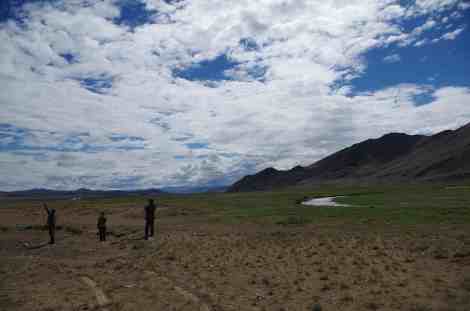
I spent the day distributing diplomas with the district ‘boss,’ Luvsantseren. A herder walked us to an area with cell phone service, and one of our company tried to capture a bar or two.

In this context, the government initiative to distribute diplomas to herders appears to be a way to formally acknowledge and value the work of mobile pastoralists as a valid profession with a set of skills that contribute to the idea of the Mongolian nation. The idea that herders play an essential role in maintaining the traditional culture and environment of Mongolia is listed in the bulleted list of herder skills highlighted on the diploma. All three objects include the term “Mongolian National Herder” which emphasizes the role of the herder in a national project. Although these objects invoke the socialist past (the red color, the symbolic qualities of a medal and a stamp), the type of citizenship that they put forth is one based on an entirely different logic of production and political participation.  This logic includes a discourse of personal responsibility and initiative, which I observed the Bayanhongor administration use multiple times with herders in a variety of formats (from sum meetings, conversations, speeches by the provincial governor, to a “relationship” notebook that is kept in the herder ger as a way to communicate with state representatives).

It is interesting to see how the distribution of these materials is playing out. In August, I visited Gurvanbulag sum, which is about 240 km north of the Bayanhongor aimag center and my primary field site of Olziit sum. (I did not take part in the distribution of the diplomas in this area). As I was talking to an older herder in his late 50s, an active and vocal member of the community who often presents long critiques of government initiatives during sum meetings, he stood up to show me the long banner of medals hanging from the north side of his ger. He explained many of them to me, but stopped at the recently distributed Mongolian National Herder medal, a shiny piece at the end of a long display of tarnished socialist awards, to say that it is the medal that he is most proud of. He removed it from the banner and held it up to emphasize that this medal was the most important of them all, and in comparison the rest did not matter. On the other hand, some herders appear to be a bit ambivalent towards the diploma. The bagiin darga himself awarded me with a diploma and issued me a registration number for his district in what appeared to be a humorous act of everyday resistance.

Why is the State Making Its Presence Felt in the Countryside?

The herders registered in the first district of Olziit sum of Bayanhongor aimag were given a “National Herder of Mongolia” diploma and medal.

How can we understand these state initiatives? Is this simply a tactic to gain more votes? Is it an initiative to be more inclusive of rural society by encouraging participation after economic collapse and the rapid post-socialist privatization of the 1990s rendered the paternal state largely absent and ineffective? The overt economic quality of these initiatives, especially in the context of Bayanhongor’s effort to revitalize its sums with funding from the World Bank, calls attention to the larger development project that the Mongolian state is carrying out. These initiatives are occurring alongside the privatization of winter and spring camps and the increasing reliance of herders on annual bank loans to finance their household (education, household expenditures, health care, livestock care). To gain further insight on how these measures might play out in Mongolia, it might be useful to look at places in Africa and Chile and the development model of value-chain driven agriculture playing out among smallholding farmers. Phil McMichael’s 2013 piece in Third World Quarterly titled “Value Chain Agriculture and Debt Relations: Contradictory Outcomes,” provides a potential starting point for looking at how the Mongolian state is moving toward managing the agricultural sector. One aspect of this model is the focus on ‘Mongolian made” fiber products, which encourages herders to sell their fiber to the local government rather than Chinese traders. The bagiin darga, who referred to himself not as a “boss” but as a servant of both the government and the district herding community, explained that prior to the government purchasing of sheep wool from herders, locally produced wool would go directly to China. He sees the government purchasing initiative as being more systematized and reliable, and contributing at least superficially to Mongolian economic and cultural sovereignty.

Contrary to an absent state in rural Bayanhongor, I observed a local administration that was very involved in managing herder affairs with frequent contact via sum meetings, phone conversations, and home visits. Government representatives are often active, absentee or former herders and play multiple roles in the community. The paternal state of the past may have given birth to a commercial one, and there needs to be more research focusing on how its institutions manifest within household units and are influencing the nature of citizenship. The formalization of household herding though the distribution of diplomas should be seen as part of this wider process of governance and the changing nature of rural work in Mongolia.

About Ariell Ahearn

Ariell Ahearn is currently a Ph.D. candidate in the School for Environment and Geography at Oxford University, where she is working on an ethnography of changing rural work practices among semi-nomadic herders in central-west Mongolia. She spent the last year working and living with herders in order to understand the conditions for practicing nomadic pastoralism in her field sites located in the region of Northern Bayanhongor province. Originally from rural upstate New York, Ariell is passionate about rural livelihoods, local knowledge, and livestock husbandry as it is practiced around the world.

Posted in Ariell Ahearn, Countryside, Education, Nomadism, Presidential 2013, Research on Mongolia | 1 Comment

Foreign Policy Roundup #16: April 14-27, 2014

After a bit of a hiatus, Foreign Policy Roundup is back, and I am expecting to restart bi-monthly postings from here on out. Highlights for this week include the Myanmar delegation’s visit to Mongolia and Saudi Arabia’s decision to open an embassy in Ulaanbaatar.


Asia Pacific

After arriving in Ulaanbaatar on April 12, the director of the Myanmar Parliament was received by Z. Enkhbold, his counterpart in the Mongolian Parliament. Mongolia and Myanmar established diplomatic relations in 1956, but this is the first state visit by an acting head of Parliament. During his official visit, Tura U Shwe visited the Mongolian Election Commission. This year Myanmar is the chair of ASEAN. See my previous article on the potential of Myanmar-Mongolian relations, here.

Mongolia’s ambassador to South Korea participated in the 2014 Trilateral Summit held in Seoul, between China, Japan, and South Korea.

Member of Parliament and Director of the Mongolian Legal Commision, Sh. Tuvdendorj, received South Korean economic representatives. During the representatives’ visit they announced out plans to expand technological cooperation and establishing a continent-wide railway network.

Mongolia and Thailand held a consultation meeting, during which they discussed cooperation in tourism, education, and general political/economic affairs.

Mongolian MP, R. Amarjargal, participated in the Institute Fund Summit 2014 Asia event in Hong Kong. During his address, he said that Mongolia welcomes investment, making specific reference to the new investment law.


Europe

Mongolia’s newly appointed ambassador to Croatia presented his credentials to the country’s president, Ivo Yosipovich. Mongolia has managed to maintain good relations with many of the Balkan states as a result of its previous relations with communist Yugoslavia.

Minister of Foreign Affairs, L. Bold, met with the French Ambassador to Mongolia. France and Mongolia have expanded political and economic relations in recent years, increasing cooperation in such sectors as tourism and education.


Middle East

L. Bold made an official visit to Saudi Arabia, where he met with his counterpart in the Saudi Ministry of Foreign Affairs. This was the first such meeting between these two countries. During the visit, Saudi Arabia announced that it would be opening an embassy in Ulaanbaatar.


United Nations

Mongolia was elected to become a member of 2 UNESCO divisions: Population and Development; and Women’s Issues.

For previous postings, please CLICK HERE.


Posted in 2014, Foreign Policy Roundup, Mongolia and ... | Tagged | Leave a comment

Foreign Policy Implications of Mongolian Crony Democracy

Though considered a healthy—albeit developing—democracy, Mongolia has in recent years become dominated by the competing interests of its political and business factions, whose collective actions undermine the country’s democratization trends as well as complicate Ulaanbaatar’s foreign policy. For now, Mongolia resides in a stable and largely friendly neighbourhood, its democratic system is peaceful, and it boasts valuable natural resources. But the intense competition among its domestic political and business factions welcomes assertive Russian interests, increases Chinese dominance, and discourages Western investors.

Recently, powerful businesses and wealthy entrepreneurs have come to dominate Mongolia’s major political parties—the ruling Democratic Party (DP) and the opposition Mongolian People’s Party (MPP)—as well as the parliament and the executive branch. This business sector dominance encourages profit-maximizing competition among party-affiliated businesses and discourages any legislative or judicial efforts to constrain their influence in politics. Such competition appears to slow down under coalition governments (e.g., 2004–2008 and 2008–2012), but expands unchecked when one party establishes a majority government (e.g., 1996–2000, 2000–2004, 2012–2016). Under a majority government in Mongolia, the ruling party routinely cancels the previous government’s projects, names party-affiliated politicians or businessmen to key posts in the government bureaucracy and state-owned enterprises, and influences judiciary and law enforcement organizations. For instance, today, 74 members of parliament (out of 76) hold wealth equal to 7.6 percent of GDP, and only 4 members of parliament account for 64 percent of this net wealth (link).

Given the inherent economic uncertainties in Mongolia’s commodities markets and rates of foreign investment, profit-maximization strategies appear overtake all other political issues that divide the country’s political and business factions. Consequently, the ideological lines between Mongolian political parties have become blurred, and these parties remain vulnerable to ever-changing short-term coalitions or dissolutions based on convenient business deals. Since 2005, the natural resource boom has intensified this competition by creating expectations of business opportunities (e.g., the growing market need for supply and support businesses) and the influx of funds (e.g., investment, fees, royalties). And this domestic phenomenon, in turn, affects Mongolia’s foreign relations with Russia, China and the Western democracies.

Mongolia’s historical sensitivity to China provides a favorable climate for Russian business groups. Although Russia’s geo-strategic interests in Mongolia have declined somewhat since the fall of Communism, Russian business groups have been influential in reviving interest in Mongolia. A recent interview by Russian goldmine owner Sergei Paushok, who contested Mongolia’s imposition of a windfall profit tax, triggered quick debates among the country’s politicians (Zuunii Medee October 26, 2013; Medee.mn, October 28, 2013).

Another example of Russia’s powerful impact on Mongolian internal politics has been the railway debate—whether to use the Chinese standard gauge domestically to link Mongolia’s mining sites to the Chinese rail network, or the Russian standard gauge to link to the Trans-Siberian Railroad (Asia Pacific Memo, February 12, 2013). While the parliament decided on the Russian standard gauge in June 2010, Mongolia’s various business factions are still debating and attempting to cancel each other’s projects to overturn this decision. Of course, the Russian side has been supportive of those Mongolian factions advocating the Russian standard gauge. But as a result of this increased Russian interest and influence, Mongolia lost $188 million in assistance from the US Millennium Challenge Account, which in turn discouraged some Western mining companies (e.g., Khan Resources in uranium mining) from investing in the country and complicated the bidding process of the Tavan Tolgoi coking coal mine (link). Finally, the Mongolian economy is still vulnerable to Russian petroleum exports (see EDM, November 21, 2012). Therefore, growing Russian business interests will certainly reduce Ulaanbaatar’s ability to make independent decisions on major mining and infrastructure projects if Mongolian political parties and their business backers continue to allow themselves to be coopted in this way.

China, with its vast manufacturing base, remains the primary outlet for Mongolian natural resources, as well as a transit corridor for Mongolia’s entry into other East Asian markets. However, Mongolia’s ability to benefit from the growing Chinese economy is being constrained by two major factors. One is the prevailing, although changing, anti-Chinese sentiment among Mongolians. The exclusion of Chinese bidders in major mining investment projects and the foreign investment law excluding foreign state-owned enterprises were mostly driven by Mongolia’s traditional anti-Chinese sentiments (see EDM, January 17, 2013). The other factor is factional fighting within domestic politics to advance party-affiliated business interests while cancelling previous deals with Chinese enterprises made by opposing political groups. Because China is not dependent on Mongolia’s resource exports (esp., coal), Mongolia’s short-term political populism and factional competition endangers the country’s economic and trade relations with China, which, in turn, hardens China’s position in subsequent economic negotiations. To assuage Chinese concerns over economic uncertainty, succeeding governments in Ulaanbaatar will likely need to commit to strategic partnership agreements and to promise more opportunities for Chinese state-owned enterprises. For instance, long-term coal export quotas and investment opportunities for Chinese energy companies were agreed during the Prime Minister Norovyn Altankhuyag’s recent visit to Beijing (Press Release of the Government of Mongolia, October 25, 2013). But these deals will likely again become vulnerable as the balance of political power in Ulaanbaatar changes or if Mongolian populist politicians again start to invoke anti-Chinese rhetoric.

The turbulent competition among Mongolian political and business factions, the success of populist politicians, and the growth of domestic civil society activists and environmental movements, as well as growing interests of Russian and Chinese state-owned enterprises in Mongolia are increasingly turning away Western investors. In particular, government agreements with Anglo-Australian Rio Tinto and Canadian Ivanhoe Mines in 2010 are still under pressure from the Mongolian side and becoming the hostage to its domestic politics. Indeed, meetings between Mongolian political leaders and high-level dignitaries from member countries of the Organization for Economic Cooperation and Development (OECD) frequently revolve around Mongolia’s mining investment environment. However, the damaging conflicts between its various political-business factions, as well as public discontent over corruption and domestic social-economic challenges—especially related to the mining sector—are almost certain to continue to complicate Mongolia’s foreign policy decisions.

Note: re-posted with the permission of the Eurasia Daily Monitor of the Jamestown Foundation, for the original news, Eurasia Daily Monitor.

Posted in China, Democracy, Foreign Policy, Mongolia and ..., Party Politics, Russia | Tagged | Leave a comment

Is the Altankhuyag Government Teetering?

Prime Minister Altankhuyag has been leading the government for almost two years. To an outside observer like me, he has remained a puzzle in how he has been able to keep a coalition and a divided party united first for the presidential election, and then under his leadership as prime minister.

Throughout the past 1 1/2 years rumours about the imminent end to the Altankhuyag government have come and gone frequently. With the MPP in a period of redefining the party, its platform and leadership, most of the speculation has focused on factions within the DP.

At the moment, the rumours of a likely change in government seem to be picking up again. Some pressure might be linked to the on-going economic challenges, lack of foreign investment, and lack of transparency in spending of funds from foreign bonds.

Why Now? Proposal to Redefine Cabinet Membership

President Elbegdorj has initiated a law that would restrict membership in cabinet to non-MPs contrary to the current practice where almost all ministers are MPs. A draft of this law was proposed earlier this year. The original proposal suggested that the law would take effect after the 2016 parliamentary election. However, the MPP, as well as the DP’s coalition-partner MPRP and some individuals including Ganbaatar and even some DP members (such as Amarjargal, Batchimeg), have rejected the notion of delaying the implementation of this law until the next parliament.

Because the division of power between the president, the prime minister, and parliament has been left somewhat unclear by the Mongolian constitution, this proposal is another round in the battle to divide power. Even though MPs would lose the opportunity to serve in the cabinet, they would gain power over ministers by having to approve their appointment.

It’s unclear what might motivate Pres. Elbegdorj to push for this change, but Prime Minister Altankhuyag and the DP have delayed discussions of this proposal.

Another development threatening PM Altankhuyag is that his daughter, A Saranzaya, has been implicated in the Anti-Corruption Agency’s investigation of the Clean Air Program that has led to the recent sentencing of Khurelsukh, a former advisor to the Prime Minister and director of the Clean Air Program. Because the Anti-Corruption Agency is seen to be guided by the President in some cases, Saranzaya’s investigation suggests that there has been a split or at least some tension between Elbegdorj and Altankhuyag.

What Might Happen?

In principle there are three ways for a government to fall:

  1. resignation of the PM
  2. a majority of cabinet members withdraw their support for the PM
  3. parliament has a vote of non-confidence (potentially initiated by the president)

It does not appear likely that PM Altankhuyag would resign. However, if he feels threatened by the current situation he might respond with a cabinet shuffle. In such a reshuffle he would likely try to sideline four of the most powerful and querulous ministers: Batbayar (Econ Development), Ganhuyag (Mining),  Gansukh (Transport) all from the DP, and Ulaan (Finance) from the MPRP.

However, discussion of cabinet membership would precede a decision about the Prime Minister. And the question of whether the law – if passed, or if a compromise like the previous maximum of one third MPs as cabinet members is adopted – would apply now or in 2016 would obviously determine the nature of any cabinet moves.

Public Perceptions

The proposal to end dual responsibility (ie MPs serving in cabinet) is generally seen as an attempt to clarify the relationship between parliament and the government. Elbegdorj’s decision in late 2000 to appoint one third MPs to cabinet is now seen as problematic for giving cabinet greater power over parliament.

While the DP is enjoying strong approval ratings, PM Altankhuyag’s reputation is suffering quickly.

The public has been very supportive of Pres Elbegdorj’s initiative to restrict dual responsibilities.

Scenarios

In order of likelihood these seem to be the looming scenarios:

  1. Altankhuyag stays as PM with the support of DP, MPRP and CWGP as before, but with a cabinet of non-MPs
  2. The coalition falls apart and a grand coalition of the DP and MPP forms, probably under the leadership of Altankhuyag
  3. A new prime minister is supported by the DP, MPRP and CWGP coalition
  4. No change in PM, coalition, and cabinet.

[This post drew on discussions with UBC graduate students G Damdinnyam & J Mendee]

Posted in Democratic Party, Party Politics, Politics | Tagged | 1 Comment

Mongolia in the 2014 Social Progress Index

[This post was written jointly by Undral Amarsaikhan and Julian Dierkes]

On April 2, the Social Progressive Imperative released its 2014 Social Progress Index. For the first time, this included Mongolia.

The Social Progressive Index is an index of indices that measures “the multiple dimensions of social progress, benchmarking success, and catalyzing greater human wellbeing”. It is compiled by the Social Progress Imperative, as US-based non-profit funded by foundations and corporations.

Ranking Mongolia

Overall, Mongolia ranks 89th of 132 countries with a score of 58.97 on a 0-100 scale, higher scores indicating more social progress. That score breaks down into three dimensions:

  • Basic Human Needs 53.67 (102nd)
  • Foundations of Well-Being 63.67 (85th)
  • Opportunity 59.56 (42nd).

SPI classifies Mongolia’s rank as belonging to a 4th tier of countries with scores from 70.66 (Kuwait, rank 40) to 58.01 (Morocco, rank 91) that also includes the BRICS, save India. Like many of the countries in this tier, Mongolia’s score varies significantly across the three dimension with an Opportunity score that ranks at the top of this tier, but Foundations of Well-Being and Basic Human Needs ranking much lower.

Ranking Mongolia vs Neighbours and Other Comparisons

Here are the scores/ranks for a small number of other countries that make for useful comparisons with Mongolia:

  • China SPI 58.67 (90th) HumNeeds 73.02 (69th) Wellb 63.78 (84th) Opp 39.21 (110th)
  • Indonesia SPI 58.98 (88) HumNeeds 63.65 (87) Wellb 69.42 (61) Opp 43.86 (92)
  • Kazakhstan SPI 59.47(86) HumNeeds 75.14 (62) Wellb 54.80 (111) Opp 48.47 (74)
  • Kyrgyzstan SPI 57.08 (93) HumNeeds 64.42 (86) Wellb 60.54 (83) Opp 46.26 (83)
  • Philippines SPI 65.86 (56) HumNeeds 66.76 (81) Wellb 69.17 (63) Opp 61.63 (39)
  • Russia SPI 60.79 (80) HumNeeds 72.15 (72) Wellb 63.66 (87) Opp 46.58 (81)

By the measures of the Social Progress Index, Mongolia is thus pretty similar to China, Indonesia, Kazakhstan, Kyrgyzstan and Russia. Its Basic Human Needs score puts it closer to countries like Ghana (52.39 = 103rd), India (54.48 = 100th), or Namibia (59.01 = 96th). By contrast, Mongolia ranks with countries like Latvia (59,85 =41st), the Philippines (61.63 = 39th), or South Africa (61.19 = 40th) on the Opportunity dimension.

What’s Driving Mongolia’s Score?

The SPI is calculated as an average of the score on the three dimensions. The dimensions in turn are scored on normalized 0-100 scales of three-six indicators per dimension.  These indicators “are selected because they are measured well, with consistent methodology, by the same organization, and across all (or essentially all) of the countries in our sample”. The weights of the indicators within the dimension are determined by a principal components factor analysis.

Let’s look at the dimension where Mongolia is ranked highly first.

Opportunity in Mongolia

This is meant to measure the “degree to which a country’s population is free of restrictions on its rights and its people are able to make their own personal decisions, and whether prejudices or hostilities within a society prohibit individuals from reaching their potential”.

Personal Rights

Not surprisingly, as an exemplary country of democratization certainly in an Asian context, Mongolia registers a higher score in the “personal rights” indicator than in the other three components of the opportunity dimension. The personal rights indicator includes electoral process, political participation and the functioning of government as sub categories.

Mongolians have witnessed six parliamentary and president election since the transition from one-party state-socialism. Those elections were largely conducted in a fine and calm fashion except for the case of 2008, and recognized as successful by foreign observers. There are no restrictions on establishing and registering a political once 800 signatures from supporters have been gathered. Therefore it can be said degree of political rights and freedom of speech is relatively higher in Mongolia as well as freedom of movement and private property rights since it is protected by law. Also it’s worthwhile to notice that Mongolia possesses a relatively strength compared to countries of similar GDP per capita in freedom of movement, freedom of assembly/association and political rights and ranked 35th in the world.

Personal Freedom and Choice

The next component of the opportunity dimension, “personal freedom and choice” consists of four really interesting but different indicators in terms of its performance in Mongolia. The population of Mongolia currently enjoys a high degree of freedom of religion. Most of the bigger religious groups are settled in Mongolia and there is no discrimination for individual’s choice at all. The same can be said for freedom over life choice which was calculated by a scaled question given by Gallup Poll.

But in terms of corruption, Mongolia ranked 83th in Corruption Perspective Index by Transparency International which is used for SPI. Although there is encouragement for fighting against this phenomenon from the president and government, there are still huge gaps to fill and lack of confidence in society in this topic. Transparency and good governance issues are crucial factors of social progress, but it is not applied well enough in Mongolia.

Now, let’s turn to the other two dimensions.

Basic Human Needs of Mongolians

This is the dimension that Mongolia scores lowest in. The Mongolia page identifies the following indicators as a “relative weakness” for Mongolia: water and sanitation and shelter. Within these indicators, all indicators for water and sanitation (access to piped water, rural vs. urban access to improved water, access to improved sanitation facilities) are identified as weak, as are the availability of affordable housing and indoor air pollution under shelter.

It seems then that the low score here is driven primarily by the somewhat nomadic nature of country-side living (no piped water, no improved water or sanitation facilities), and the challenges inherent in life in the ger districts in the periphery of Ulaanbaatar.

Improvement in some aspects of these scores would thus come most easily by settling pastoral herders into permanent dwellings, but this would not only be anathema to the Mongolian exultation of nomadic life, but it would be difficult to see this as social progress in a Mongolian context. That is not to say that these are not valid indicators of social progress in broad cross-national comparisons, but simply to say that there are aspects of life in Mongolia that are not well-matched by the indicators.

By contrast, the two aspects of shelter that constitute a weakness may be more obvious to address by Mongolian policy-makers. Air pollution clearly is one of the foremost challenges that has a very real impact on Mongolians’ lives.

The availability of affordable housing is measured by the Gallup World Poll. As far as I can gather there were waves of surveys in 2009 and 2010 that asked, “Have there been times in the past 12 months when you did not have enough money to provide adequate shelter or housing for you and your family?”.

I find it difficult to interpret this in a Mongolian context. The emphasis on “having enough money” suggests that this question may not mean much for the 30% or so of Mongolians who live as pastoral herders and would thus have access to a ger through their families, though a herder who might have lost his herd due to a dzud might end up not having the resources to make repairs on a ger, for example.

For residents in soum and aimag centres, it’s not entirely clear whether this question might be answered primarily in terms of “adequate shelter/housing” or in terms of the money required for such housing. Likewise for much of Ulaanbaatar, I imagine.

Clearly, housing is an urgent need in Ulaanbaatar’s city planning and in an urban context it seems fair to guess that at least some Mongolians would prefer an affordable apartment to living in a ger in the ger districts, so in that sense a greater portion of respondents in such a poll who think that they do have the funds to afford adequate housing would constitute a measure of social progress.

Foundations of Well-Being for Mongolians

When we examine the specific indicators that make up the foundations of well-being dimension, the ones that constitute a weakness are “health and wellness” and “ecosystem sustainability” virtually across the board, except for the “life expectancy” and “obesity” indicators of “health and wellness”, and the “biodiversity” indicator for “ecosystem”.

“Non-communicable disease deaths between the ages of 30 and 70” and “Outdoor air pollution attributable deaths” are based on WHO data.

Obviously, air pollution is a severe problem. However, it is also a problem with a particular context. It is primarily a problem in Ulaanbaatar and thus affects approximately 40% of the population. It is also a seasonal problem. While pollution levels are worse in the winter than in Chinese cities which have been reported on so much in the past two years, pollution is much reduced in the summer. Christa Hasenkopf looked at the Beijing-UB comparison in more detail in January 2013.

The primarily regional and seasonal impact of air pollution does not negate the utility of comparing Mongolian data to other countries, however, unlike the sanitation and water examples above and below, for example. Pollution in Ulaanbaataar can be addressed without an immediate and direct impact on nomadism, for example, and the health benefits would be immediate.

The suicide rate is given by the Institute for Health Metrics and Evaluation. I was puzzled by this last factor as I had not previously heard of Mongolia as possessing either a high or low suicide rate, in fact this had not been mentioned to me as a factor at all.

The Institute for Health Metrics and Evaluation is based at the University of Washington in Seattle, WA. Oddly, a search for “suicide” on their webpage yields only two results, neither of which suggest themselves as a source of data. The website offers a “Causes of Death” visualization tool, but when I select Mongolia and “self-harm” as a cause, there is no data available. It looks like I will have to turn to some advice from health experts to find out more about the suicide rate in Mongolia. Tsgotbaatar B (PhD candidate at Simon Fraser University) pointed me to the website WorldHealthRatings. The data reported there is claimed to be based on WHO statistics and reports a suicide rate of 13.74/100,000 for Mongolia ranking it 36th highest in the world. The figure that is used in the SPI is slightly lower, 12.2 ranking Mongolia as 92nd for this category which is puzzling given the WorldHealthRatings comparison of suicide rates across countries. Life expectancy is listed at 67.1 years ranking Mongolia 94th in the world which also seems low.

Under the “ecosystem sustainability” header, “greenhouse gas emissions” and “water withdrawals as % of resources” appear as weaknesses. Green house emissions reference to the World Resources Institute in Washington DC. On a per capita basis, Mongolia’s emissions do seem to be high at 8.66 tCO2 (excluding “forest and land-use change activities”). Comparable figures for Indonesia and the Philippines are 3.42 and 1.59 tCO2, respectively. Given that these are 2010 figures, I can only assume that the use of coal for personal heating and also for power generation must account for these relatively high numbers. Unlike many other countries, for Mongolia, there seems to be a big difference between emissions excluding “forest and land-use change activities” and those including these activities.

The Aqueduct Country and River Basin Rankings assign Mongolia an “extremely high” water risk score based on baseline water stress, interannual variability, seasonal variability, flood occurrence, and drought severity. I suspect that Mongolia’s risk here is driven by the scarcity of water more than by any social policies and policies will have a hard time addressing this scarcity so that this factor seems to be a bit of a permanent handicap.

Global Benchmarks vs. Local Realities

Global indices like the Social Progress Index are intended to give policy-makers a point of comparison for the success of their policies, but also to inspire thinking about future directions for policies.

By necessity, such indices are dependent on comparable data and on consistent definitions of terms. This dependence inherently weakens conclusions for specific countries.

In the case of Mongolia, for example, the association of water and sanitation with progress would suggest that the government of Mongolia ought to pursue policies of settling pastoral herders (as the Chinese government is in Inner Mongolia), but few in Mongolia would see such settlement policies as “progress” even if they did lead to a higher rate of access to improved sanitation.

Global benchmarks therefore need to be interpreted in a national context.

A more complex indicator like the SPI certainly offers opportunities for much more sophisticated and interesting interpretation than GDP does for example. At the same time, just like the Human Development Index certain forms of economic, political and social development are clearly privileged over other forms by such indices.

By contrast, the water and sanitation indicators would need a more nuanced response that acknowledges that the Mongolian rural context is different and calls for different policies. But, an improvement of access to water and sanitation seems to be very much on the agenda for development of Ulaanbaatar ger districts in any case.

Greenhouse gas emissions are mostly caused by the use of coal for heating and energy production which in turn link to air pollution, so a focus on reducing air pollution would seem to address a number of issues associate with notions of social progress.

Some of the health indicators may also be impacted by the very low population density outside of Ulaanbaatar which clearly stretches a health system thinner than would be the case in more dense population scenarios at similar levels of expenditures.

Policy Implications

Assuming for the moment that there would be broad agreement over the goal of social progress and many of the aspects of social progress that are included in the SPI and that a higher ranking is therefore desirable, what lessons does the index hold for Mongolian policy-makers?

Obviously, different strategic responses are plausible. A focus on remedying weakness or further building on strengths would be one approach, while a broad alternative might be to try to aim for across-the-board improvements.

Yet, some indicators in the SPI are more easily subject to improvement by policy than others and some of them perhaps take on more local importance than others.

Air pollution would seem to be a factor that clearly stands out as a weakness for Mongolia and also as a factor that is perceived as detrimental by many Mongolians though obviously more so by residents of Ulaanbaatar than rural Mongolians.

Likewise the indicators under health and wellness suggest areas for improvement to bring Mongolia more in line with its increasing level of income and associated level of availability of resources.

Other Comparisons

For a general sense of how Mongolia fares relative to other countries on many dimensions, see our Mongolia Scorecard.

About Undral Amarsaikhan

UNDRAL Amarsaikhan has a background in economics and journalism. He is currently official delegate of Mongolia in Asia Pacific Youth Parliament for Water and World Student Community for Sustainable Development. He tweets @uundaa.

Posted in Air Pollution, Corruption, Development, Economics, Education, Global Indices, Governance, Nomadism, Policy, Policy, Primary and Secondary Education, Research on Mongolia, Social Change, Undral Amarsaikhan, Water | Tagged | 1 Comment

Fellow Mongolia Focus Bloggers Marching Along in Academic Careers

Congratulations to two Mongolia Focus grad student bloggers!

  • MENDEE Jargalsaikhan passed his comprehensive examinations in Political Science at the Univ of British Columbia last week. The next step for him will be to write and defend a dissertation proposal to advance to candidacy for the PhD.
  • Brandon Miliate was awarded a US Dept of Education Foreign Languages and Area Studies (FLAS) fellowship to study Burmese this summer while continuing his graduate studies in Political Science at the Univ of Indiana.

While continuing their focus on contemporary Mongolia, Brandon and Mendee are pursuing comparative research, so let’s all hope to read and learn more from them in the future as they deservedly revel in these important steps/successes.

Posted in Brandon Miliate, Mendee Jargalsaikhan, Research on Mongolia | Tagged | Leave a comment

Book Reviews: Change in Democratic Mongolia

The edited volume, Change in Democratic Mongolia: Social Relations, Health, Mobile Pastoralism, and Mining has been reviewed in the following academic publications:

  • Morris Rossabi (2013) in Pacific Affairs 86 (3): 642-644.
  • Jeremy Swift (2014) in Nomadic Peoples 18 (1): 152-155.
  • Tjalling Halbertsma (2014) in Journal of Asian History 48 (2): 12-14.
Posted in Book: Change in Democratic Mongolia, Research on Mongolia | Tagged | Leave a comment